
When a hard floor feels tacky after cleaning, the cleaner has not necessarily “failed”. The surface may be carrying excess product, redistributed soil, contaminated mop water or an incompatible coating. Think in terms of what went down and what came back up.
The main causes of a sticky floor
- Overdosing: more formulation is left to dry than the process can remove.
- Dirty solution: a mop repeatedly returns suspended soil to the floor.
- Wrong product or format: a surface may require a low-residue maintenance cleaner rather than a general-purpose system.
- Incomplete removal: heavy contamination may need staged cleaning.
- Surface or coating interaction: some finishes have manufacturer-specific requirements.
A controlled floor reset
- Identify the floor.Distinguish sealed wood, laminate, vinyl, ceramic, stone and specialist coatings.
- Dry-remove grit.Vacuum or sweep first. Wet grit increases abrasion and consumes cloth capacity.
- Use the stated dose.If dilution is required, calculate it accurately with the Dose & Dilution Calculator.
- Keep water controlled.Do not flood joints, edges or moisture-sensitive flooring.
- Change the working solution.Once visibly dirty, it is a soil reservoir rather than an effective rinse medium.
- Allow the floor to dry undisturbed.Then assess tack under clean footwear rather than while damp.
05 Floor
Low-residue daily maintenance chemistry for compatible hard floors.
Floor-specific cautions
Sealed wood and laminate
Use minimal moisture and never assume damaged edges or worn seals remain water resistant. Follow the flooring manufacturer’s care requirements.
Stone and tile
“Stone” covers materials with very different acid sensitivity and porosity. Confirm both cleaner and sealer compatibility.
Vinyl and resilient flooring
Residue, polish layers and old maintenance products can overlap. Avoid aggressive abrasion that changes the finish.
Read the residue pattern
Uniform tack commonly points towards dose, product format or incomplete removal. Tack only in traffic lanes may indicate a heavier load of shoe oils and compacted soil. Cloudiness at the perimeter can reveal edges missed during removal. Treat those patterns as diagnostic evidence instead of increasing the product dose everywhere.
Design a maintenance routine
Frequent dry removal stops grit being ground into the finish. Wet-cleaning frequency should then follow use: entrances and kitchens may need more attention than low-traffic rooms. Keep the method consistent—measured dose, known water volume and clean equipment—so any change in result can be traced. If a controlled reset does not improve the surface, stop escalating chemistry; apparent residue may be a worn coating, old polish or physical damage.
Frequently asked questions
Should I add extra cleaner for a dirty floor?
Not automatically. Heavy soil may require fresh solution, more cloth capacity or a repeated controlled pass—not a stronger unmeasured dose.
Why are footprints visible after drying?
Possible causes include residual formulation, redistributed oil or incomplete drying. Inspect whether marks occur everywhere or only in traffic areas.
Can I mix floor products?
No. Use one compatible product according to its label.
RELEVANT PRODUCT
Match the chemistry to the job.
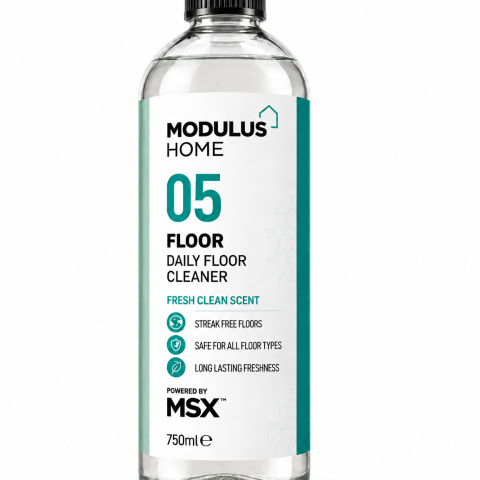
05 Floor
A ready-to-use cleaner for routine maintenance of compatible hard floors, designed around controlled wetting and a low-residue finish.
£6.99Always read the product label, confirm surface compatibility, ventilate as directed, keep products away from children and pets, and never mix household cleaners.